Description
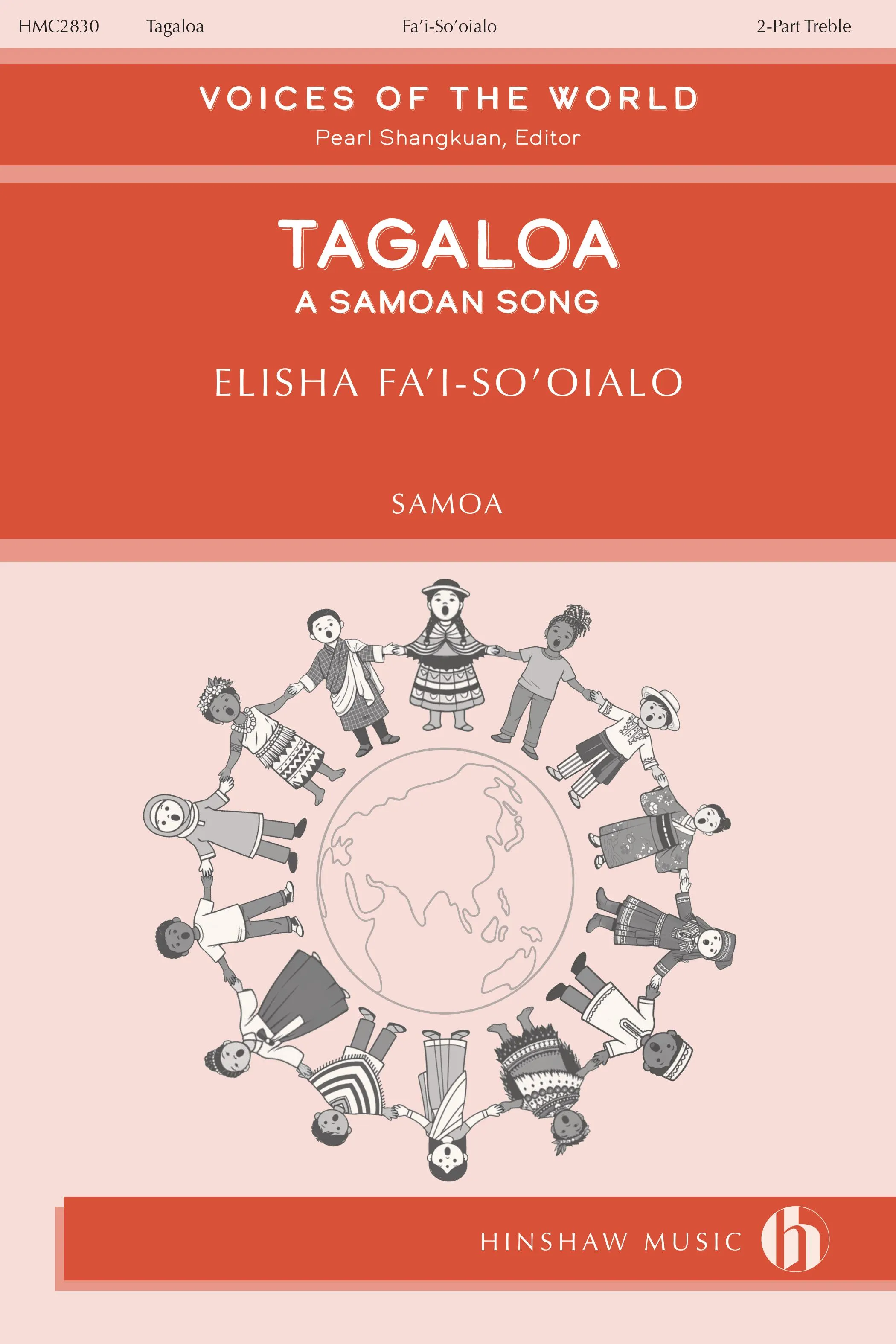
Tagaloa offers an energetic and culturally enriching immersion into the musical flavors of the Pacific. Drawing from the traditional sounds of Samoan chanting and drumming, this composition brings the legends of the Pacific to life. It is part of the Multicultural Series, showcasing Elisha Fa’i-So’oialo’s signature style of authentic Pacific Island writing.
With its accessible vocal lines and celebratory spirit, Tagaloa is an ideal selection for children’s choruses and community choirs alike. It serves as a powerful centerpiece for concerts centered on themes of exploration, heritage, or celebration.
Tagaloa – Elisha Fa’i-So’oialo | 2-Part Treble Choir with Percussion
Bring the sounds, stories, and rhythmic vitality of Samoa to the concert stage with Tagaloa, an engaging work for 2-part treble choir and percussion by Samoan composer Elisha Fa’i-So’oialo. Drawing on the character of traditional Samoan chanting and drumming, Tagaloa gives young and developing singers an opportunity to experience Pacific Island musical traditions through music that is energetic, accessible, and grounded in cultural identity.
The title itself carries an important connection to Samoan tradition. Tagaloa is a central creator figure in Samoan mythology, appearing in traditional accounts of the creation of the islands, the heavens, land, water, and human life. One Samoan creation tradition describes Tagaloa creating a place upon the earth and the island of Manu‘a, while other Pacific traditions preserve related versions of this important figure. That cultural background gives the piece an especially meaningful place in concert programs exploring Samoan culture, Pacific Island music, creation stories, heritage, identity, and the relationship between music and storytelling.
Musically, Tagaloa combines two-part treble vocal writing with percussion, making rhythm a central part of the singers’ experience. Rather than treating the percussion as an ornamental addition, the combination of voices and drums helps establish the work’s driving character and connection to Samoan musical traditions. The vocal lines are rated Easy by the publisher, making the piece particularly attractive for children’s choirs, youth choirs, school treble ensembles, community choruses, and developing singers who are ready to explore repertoire outside the traditional Western choral canon.
For choir directors, the two-part voicing offers an important advantage. Meaningful multicultural repertoire does not need to be reserved for advanced SATB ensembles. Tagaloa allows younger singers and choirs with developing part-singing skills to encounter a musical tradition that may be new to them while still working on fundamental ensemble skills such as rhythmic precision, independence between vocal parts, unified articulation, listening, and communication between singers and percussionists. The result is repertoire that can contribute to a choir’s musical development while also broadening the cultural scope of its programming.
Composer Elisha Fa’i-So’oialo brings a personal connection to the traditions represented in the work. A New Zealand-born Samoan musician, Fa’i-So’oialo has worked as a singer, composer, music educator, conductor, and advocate for Pasifika arts. Choral singing has been part of her musical life since childhood, beginning with singing in a Samoan church choir and continuing through participation in major New Zealand youth choral organizations. Her professional work has also included teaching young musicians and directing community choirs. This background gives Tagaloa a perspective that is particularly valuable for directors seeking multicultural choral repertoire connected to the lived musical and cultural experience of its composer.
That authenticity is one of the qualities that makes Tagaloa worth considering when building a more globally representative choral program. Rather than approaching Pacific Island culture simply as an exotic musical color, directors can use the piece as an opening for students to learn about Samoa, Pasifika musical traditions, oral storytelling, mythology, communal music-making, and the role of rhythm and chant in cultural expression.
The work can also provide an effective change of texture within a concert. Its percussion-driven energy and two-part treble sound can create a striking contrast with lyrical accompanied works, traditional European repertoire, or contemporary concert pieces. This makes Tagaloa particularly useful as an opening selection, concert centerpiece, or energetic transition within a larger program.
Consider programming Tagaloa for concerts centered on world music, multicultural choral repertoire, Pacific Island cultures, heritage, community, creation, mythology, exploration, cultural identity, or celebration. It can also be a strong choice for school and community programs designed to introduce audiences to musical traditions from Oceania and the broader Pacific.
Published by Hinshaw Music in the Voices of the World Choral Series, Tagaloa reflects the series’ emphasis on expanding the range of cultures and musical traditions represented in choral performance. The combination of accessible two-part writing, percussion, Samoan cultural influence, and a vivid performance character makes it an especially appealing selection for directors searching for Samoan choral music for treble voices or multicultural repertoire for children’s and youth choirs.
Tagaloa by Elisha Fa’i-So’oialo
2-Part Treble Choir with Percussion
Catalog No. HMC2830
Difficulty: Easy
Voicing: 2-Part Treble
Style: Traditional
Season/Programming: Multicultural
Series: Voices of the World Choral Series
Published by Hinshaw Music
Additional information
| Catalog # | HMC2830 |
|---|---|
| Voicing | |
| Composers | |
| Authors | |
| Accompaniment | |
| Style | |
| Release Date | |
| Content | |
| Season | |
| Difficulty | |
| Publisher | |
| Series | |
| Status |
You May Also Like…